EDITORIAL: PRESIDENT TINUBU GOVERNMENT CLEAN UP, TIME TO CLOSE NIGERIA LOOPHOLES FOR GHOST WORKERS AND CONTROL FAILURES
By PRESSTV NEWS NIGERIA Editorial Board
Nigeria’s public sector has lived for decades with a troubling contradiction: a government that struggles to provide enough resources for citizens, yet continues to lose scarce public funds through weak controls, duplicated structures, questionable payroll records and administrative loopholes.
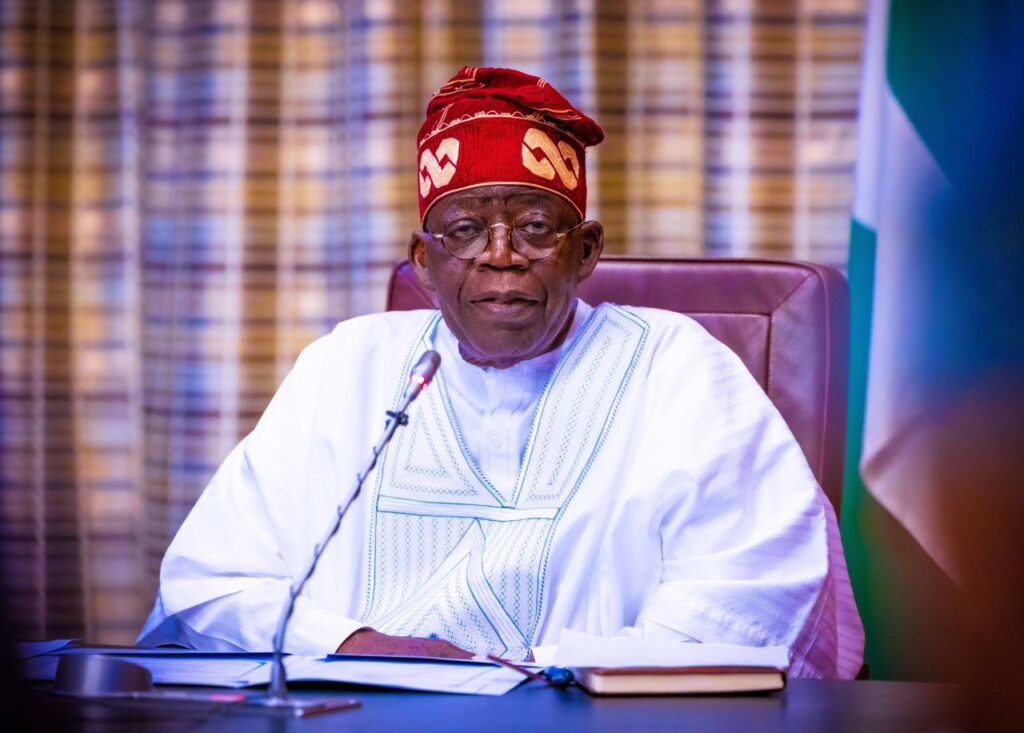
President Bola Ahmed Tinubu move to subject the Integrated Personnel and Payroll Information System (IPPIS), federal ministries, departments and agencies to a comprehensive forensic review therefore deserves serious attention.
But this should not be treated as another government audit destined for a shelf. It should be a reset of the way Nigeria manages its public institutions. The more important question is how they were allowed to survive within a system designed specifically to prevent them.
For years, successive administrations have introduced technology-driven reforms to eliminate payroll fraud and improve personnel management. Yet allegations of ghost workers, irregular appointments and payroll manipulation continue to surface. If the system is working, why do these leakages keep returning?
Tinubu administration must be prepared to ask that question without fear or favour. An effective forensic exercise should establish not merely who received money improperly, but how those individuals entered the system, who approved them, who verified their identities and why existing controls failed to detect them. That is where the real story lies.
The reported emergence of questionable or allegedly fictitious government agencies and initiatives should alarm every Nigerian. Government is supposed to operate through laws, regulations, approved budgets and identifiable chains of authority. When an entity whose legitimacy is questionable can present itself as part of the Federal Government, the problem goes beyond the entity itself. It exposes weaknesses in institutional verification.
A serious clean-up must therefore examine the entire architecture through which government agencies are created, recognised, funded and monitored. Before any organisation receives public money, occupies government facilities, recruits personnel or interfaces with official institutions, its legal status should be independently verifiable. There should be no room for mystery agencies in the Nigerian government.
The Federal Government should resist the temptation to measure the success of the exercise by the number of ghost workers discovered. The bigger measure should be the amount of public money protected and the loopholes permanently closed.
Every questionable payment should have a trail.
Every payroll record should have a human being behind it.
Every employee should have verifiable identity and employment records.
Every agency should have a legal foundation.
Every public institution should have clearly defined responsibilities.
And every financial transaction should be capable of being independently traced.
This is what forensic auditing should mean in practical terms.
CONTROL FAILURE IS ALSO ACCOUNTABILITY FAILURE
There is an understandable tendency in Nigeria to blame corruption on the individual who steals. But government systems must also answer for what they permit. If a person who is not entitled to a salary manages to remain on the payroll for years, somebody failed to verify the record.
If a questionable organisation gains access to government facilities or processes, somebody failed to authenticate its status, and public funds are transferred without adequate reconciliation, somebody failed to enforce the controls.
The Federal Government must therefore expand the conversation from “Who stole?” to “Who allowed the system to make the theft possible?”
DIGITAL GOVERNANCE MUST MEAN MORE THAN COMPUTERISATION
Nigeria has invested heavily in digital platforms for personnel management, payments and public finance. But technology alone does not guarantee accountability.
A poorly designed process can simply become a digital version of the same old problem. The government must therefore examine how IPPIS interacts with other public financial and administrative systems, how information is updated, who has authority to alter records, how unusual transactions are flagged and whether different databases actually reconcile with one another. The objective should be a government ecosystem in which one false record cannot easily become five official records.
“For the exercise to command public confidence, it must be allowed to reach every level of government administration. Permanent secretaries, directors, political appointees, civil servants, contractors and institutions should be subject to the same standards where the evidence warrants scrutiny.”
A clean-up that targets only junior officials while leaving senior decision-makers untouched would amount to another missed opportunity. The Nigerian public wants results, not scapegoats.
WHAT SHOULD COME AFTER THE AUDIT?
The Federal Government should publish a clear implementation framework after the forensic review.
That framework should include:
- The number of irregular personnel identified.
- The financial value of suspected leakages.
- The amount recovered.
- The number of questionable entities removed or regularised.
- Identified weaknesses in government control systems.
- Officials or institutions found responsible for serious breaches.
- New safeguards introduced to prevent recurrence.
- A timetable for independent follow-up audits.
Most importantly, Nigerians should not have to wait another decade before discovering that the same loopholes have reopened. Government reform must be continuous.
TINUBU HAS A GOVERNANCE OPPORTUNITY
President Tinubu inherited a federal bureaucracy with layers of administrative practices accumulated over successive governments.
His decision to confront the weaknesses in the system gives his administration an opportunity to leave behind something more valuable than another policy announcement: a government machinery that is harder to manipulate and easier to monitor.
That legacy will not be determined by the announcement of an audit. It will be determined by what happens when the audit uncovers uncomfortable truths.
Will the money be recovered?
Will compromised systems be redesigned?
Will those responsible face consequences?
Will the reforms survive political transitions?
Those are the questions that Nigerians should be asking.
PRESSTV NEWS NIGERIA EDITORIAL POSITION
We believe President Tinubu forensic clean-up should be approached as a national institutional surgery, not a publicity exercise. Nigeria cannot continue borrowing, taxing and generating revenue from a struggling economy while allowing weaknesses inside government systems to drain public resources.
The country needs a government where every worker is real, every agency is legitimate, every payment is traceable and every control has an accountable owner.
The President administration should go beyond finding ghost workers. He should exorcise the loopholes that created them. And when the clean-up is complete, Nigerians should be able to see not just a cleaner payroll, but a stronger, more disciplined and more accountable Federal Government.
That would be a reform worth remembering.
Editor: Olushola Akinyele
olupress@yahoo.com
07080192122
About The Author