Nigeria at 66: An open letter to government on rebuilding hope and protecting democracy

By Olushola Akinyele | Presstv News Nigeria
Dear President, leaders of government and political office holders,
Today, Nigeria marks 66 years of independence.
Sixty-six years after the lowering of the Union Jack and the raising of the Nigerian flag, this anniversary offers us more than an opportunity to celebrate our national colours, sing patriotic songs and deliver ceremonial speeches. It is a moment for honest reflection.
It is a moment to ask: What have we made of the freedom our founding fathers fought for? What kind of Nigeria are we building for the generations coming behind us? And can the ordinary Nigerian still believe that government exists primarily to protect, serve and provide opportunity?
Nigeria’s journey since independence has been anything but simple. We have experienced military rule, civil war, political instability, economic crises and democratic transitions. Yet, despite the turbulence, Nigeria has survived and, since 1999, sustained more than two decades of uninterrupted democratic rule.
That achievement should not be taken for granted. But democracy must mean more than elections every four years. Democracy must be felt in the homes, markets, schools, hospitals, farms and workplaces of ordinary Nigerians.
Government must confront the reality of poverty
For millions of Nigerians, independence celebrations are taking place against the reality of economic hardship.
The World Bank says more than 60 percent of Nigerians were estimated to be living below the national poverty line in 2025, while the IMF reported that poverty had reached 63 percent and estimated that 27 million Nigerians faced food insecurity in the second half of 2025.
These figures are not merely statistics. Behind every number is a family struggling to feed its children, a young graduate searching endlessly for employment, a small business owner battling rising operating costs, a farmer worried about security, a pensioner trying to survive and a parent wondering how school fees and medical bills will be paid.
Government reforms may be necessary to correct long-standing economic problems, and the World Bank acknowledges improvements in macroeconomic stability. But it also notes that household incomes have not fully recovered and poverty remains high.
The challenge, therefore, is to ensure that economic reforms ultimately translate into food on the table, jobs, affordable housing, accessible healthcare, quality education and a dignified standard of living.
Nigeria must not become a country where economic growth is discussed mainly in official reports while ordinary citizens experience only rising costs.
Insecurity is a threat to national development
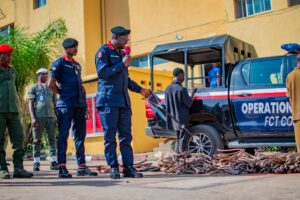
No nation can truly prosper when its citizens are afraid. Banditry, kidnapping, terrorism, communal violence and other forms of insecurity continue to affect communities across different parts of Nigeria. The World Bank identifies insecurity – including banditry, kidnapping, insurgency and separatist agitations as a continuing challenge.
Security is not simply about deploying more personnel. It is about intelligence, technology, effective policing, justice, border management, community engagement and addressing the economic conditions that make vulnerable young people susceptible to criminal networks.
Government must also ensure that security agencies operate professionally and within the law. Nigerians should be able to trust that their lives and property will be protected regardless of their ethnic, religious, political or geographical background.
A farmer cannot produce food when afraid to enter his farm.
A business cannot flourish when transportation routes are unsafe.
A child cannot learn effectively in a community displaced by violence.
Security, therefore, is not separate from development. Security is the foundation upon which development rests.
Let education, healthcare and jobs become national priorities
Nigeria’s greatest resource remains its people. Our young population represents enormous potential, but potential without opportunity can become frustration.
The country needs an education system that prepares young Nigerians for the realities of the modern economy. We need stronger technical and vocational education, digital skills, entrepreneurship and research.
We also need a healthcare system where Nigerians do not have to travel abroad or spend their life savings to receive basic treatment.
Most importantly, Nigeria must create productive employment at scale. The World Bank estimates that about 3.5 million people enter Nigeria’s labour force every year, placing enormous pressure on the economy to generate quality jobs.
Government cannot create every job, but it can create the environment in which businesses can invest, expand and employ.
Reliable electricity, good roads, efficient ports, stable policies, accessible credit, security and predictable taxation are not luxuries. They are requirements for economic growth.
The political class must remember the meaning of public service. At 66, Nigeria must begin to ask harder questions about leadership.
Public office should not be treated as a pathway to personal enrichment, political protection or permanent access to public resources.
It should be understood as a responsibility. The Nigerian taxpayer deserves accountability for every naira spent in his or her name.
Budgets must produce measurable results. Public projects must be completed. Government institutions must work. Corruption must be confronted regardless of who is involved.
The country cannot continue to lose valuable resources through waste while citizens are asked to make sacrifices.
Leadership must be measured not only by the number of projects commissioned, but by whether people’s lives actually improve.
As 2027 approaches, protect Nigeria’s democracy
The next general election will be one of the most important moments in Nigeria’s democratic journey.
INEC official timetable places the presidential and National Assembly elections on January 16, 2027, with governorship and State House of Assembly elections scheduled for February 6, 2027.
As political parties prepare for campaigns, Nigerians must remember one fundamental truth:
Nigeria is bigger than any political party, candidate, ethnic group, religious organisation or political godfather.
The 2027 election should not become a battle over identity, religion or ethnicity. It should be an opportunity for citizens to examine the records, programmes, character, policies and priorities presented by those seeking public office.
Nigerians should ask difficult questions.
What is the candidate’s plan for jobs?
What is the plan for security?
What will be done about poverty and food insecurity?
How will education and healthcare be improved?
How will corruption and waste be confronted?
How will young people participate meaningfully in the economy?
And perhaps most importantly: How will institutions be strengthened so that Nigeria does not depend solely on the personality of whoever occupies the highest office?
Citizens must also protect their votes peacefully and lawfully. They should resist vote-buying, political intimidation, ethnic hatred, religious manipulation and election violence.
The ballot belongs to the people… No politician should be allowed to convince Nigerians that violence is a legitimate instrument of political competition.
The International Republican Institute’s 2026 assessment of Nigeria’s 2027 elections highlighted concerns including political violence, vote-buying, declining public trust and the need for credible, transparent electoral administration. It also noted that Nigeria retains important democratic foundations, including an active civil society, multiparty competition and established electoral institutions.
That means the responsibility does not belong to INEC alone.
Government must protect the integrity of the electoral process. Political parties must respect the rules. Security agencies must remain professional and impartial. The media must report responsibly. And citizens must defend their democratic rights peacefully.
Save the country, not a politician
As journalists, we must say this clearly.. Nigeria’s democracy belongs to Nigerians.
Political leaders will come and go.
Governments will change.
Political parties will rise and fall.
But Nigeria will remain.
Therefore, Nigerians must never allow temporary political interests to destroy the country’s democratic foundation.
We must disagree without becoming enemies.
We must campaign without dehumanising opponents.
We must debate policies without turning ethnicity or religion into weapons.
We must hold government accountable without resorting to violence.
And we must participate in elections not merely as supporters of individuals, but as citizens defending the future of our country.
To the government: listen to the people
Mr. President and leaders at every level of government, the Nigerian people are not asking for perfection.
They are asking for a government that listens.
They want security.
They want affordable food.
They want electricity.
They want jobs.
They want functioning schools and hospitals.
They want justice.
They want roads and public infrastructure that work.
They want institutions they can trust.
They want leaders who understand that public office is temporary but the consequences of leadership decisions can last for generations.
Nigeria has enormous resources, extraordinary human capital and a resilient population. What remains urgently necessary is the political and institutional capacity to convert these advantages into broad-based prosperity. At 66, the question should no longer be whether Nigeria has potential.
The question is whether we will finally convert that potential into reality.
A message to Nigerians
On this Independence Day, let us celebrate Nigeria without pretending that everything is fine.
Let us acknowledge our achievements without ignoring our failures.
Let us criticise government without losing faith in our country.
Let us demand accountability without destroying our institutions.
And as 2027 approaches, let us remember that the future of Nigeria cannot be left entirely to politicians.
We are the citizens. We are the voters. We are the taxpayers. We are the custodians of this democracy.
The Nigeria we desire will not be built by government alone. It will be built when citizens demand better, leaders accept responsibility, institutions work, and everyone understands that the survival of Nigeria’s democracy is a shared responsibility.
Sixty-six years after independence, Nigeria deserves a new chapter – one defined not merely by political promises, but by security, opportunity, justice, accountability and dignity for all.
May Nigeria survive its challenges.
May our democracy grow stronger.
May our leaders serve with humility and accountability.
And may every Nigerian have a reason to believe that the best years of this country are still possible.
Happy 66th Independence Anniversary, Nigeria.
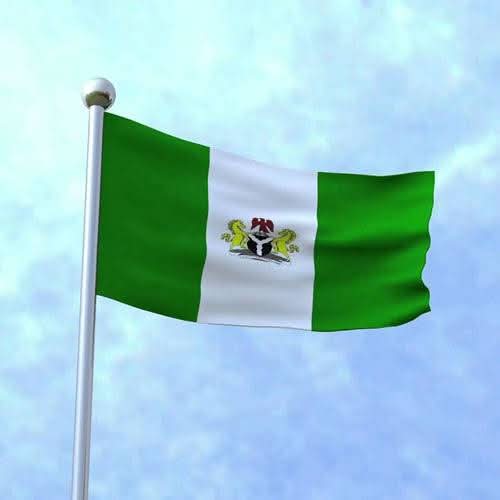
God bless the Federal Republic of Nigeria.
About The Author