

2027: Hashim Unveils Plan to Restore 3,000 Shut-In Oil Wells, Targets 4m Barrels Daily in 24 Months
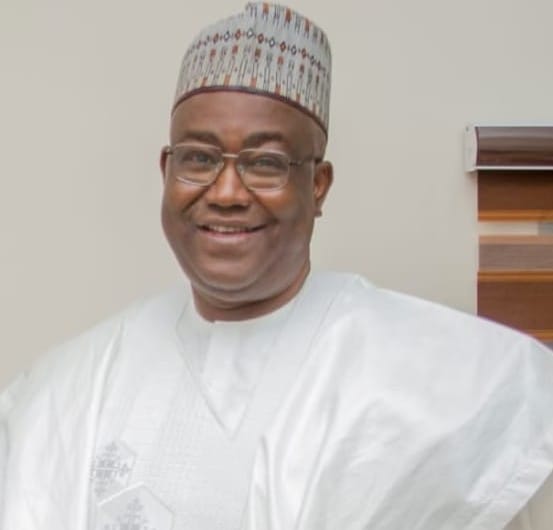
Presidential candidate of the Accord Party, Gbenga Olawepo-Hashim, has unveiled what he described as the production backbone of his Energy First Presidential Agenda, promising to raise Nigeria’s crude oil production to a minimum of four million barrels per day; within 24 months of an Accord administration.
Hashim made the declaration when he appeared on Channels Television’s Politics Today programme, over the weekend, where he outlined his strategy for using Nigeria’s existing petroleum assets to rapidly expand production.
At the centre of the plan, said Hashim, is an investment programme to bring approximately 3,000 currently non-producing oil wells back into productive operation.
“We have oil wells that have already been drilled, assets that have already been discovered and infrastructure that have already been built. Our first task is to put these assets back to work for Nigeria.”
Hashim maintained that government should prioritise the recovery of existing productive assets over committing scarce public resources to projects like Lagos-Calabar Coastal Highway, arguing that the road may not bring any revenue to government in the next 20years.
Presstv News Nigeria learnt that the announcement comes against the backdrop of Nigeria’s current crude production of about 1.5 million barrels per day.
Moving from approximately 1.5 million to four million barrels daily would represent an increase of almost 2.5 million barrels per day, or more than 160 percent above current crude production.
The Accord presidential candidate argued that Nigeria’s fundamental problem is not the absence of petroleum resources, but the failure to convert existing resources and productive assets into reliable energy supply.
He said his administration would, therefore, make production recovery one of the first priorities of government.
The proposed programme would identify why each viable inactive well is not producing and deploy the necessary capital and technical interventions required to restore production. These interventions could include well workovers, well intervention, artificial lift systems, repairs to gathering infrastructure, pipeline rehabilitation, improved evacuation arrangements and other field specific interventions.
For Hashim, the 3,000 wells are not merely dormant petroleum assets. They represent what he described as Nigeria’s wasted productive capacity.
“The question is not how much oil Nigeria has underground. The question is why we are not producing the oil that our existing assets are capable of producing,” he added.
He said an Accord administration would establish a National Production Recovery Dashboard to track every intervention, investment and additional barrel generated.
Operators would be expected to provide clear production timelines while government agencies would be required to remove bureaucratic obstacles standing between investment and actual production.
Hashim’s four million barrel production target is also central to his earlier petrol-pricing proposal.
He has proposed ₦605 per litre as the starting price of petrol, with a longer term objective of bringing the price down to between ₦200 and ₦300 per litre.
The philosophy, he said, is straightforward; reduce the cost of producing energy and the cost of energy can ultimately fall.
“That is why increased crude production, domestic refining, lower operating costs, transparent petroleum sector accounting, infrastructure rehabilitation and exchange rate stability are central to the Energy First plan.
“You make energy cheap by making the cost of producing energy cheap.”
Hashim stressed that his four million-barrel target is not designed merely to increase crude exports.
His vision is for Nigeria to produce more crude and refine more crude domestically, with the ultimate goal of creating an energy economy in which Nigeria can supply its own petrol, diesel, aviation fuel and other petroleum products while also exporting surplus refined products to international markets.
He said an Accord administration would use the expanded petroleum production base to support a wider energy transformation involving gas-to-power, independent power projects, captive and embedded generation, mini-grids, petrochemicals and industrial energy infrastructure.
Nigeria, he said, must first have enough affordable and reliable energy to power its factories, farms, transport system and homes before allowing the energy transition debate to become disconnected from the country’s enormous energy deficit.
Hashim said his objective is to make Nigeria a country capable of providing the world with a stable, reliable and consistent supply of both crude oil and finished petroleum products.
“We want Nigeria to become an energy power, not merely a country that happens to have oil,” he said.
About The Author